Stories With a Purpose
A House for Prayer
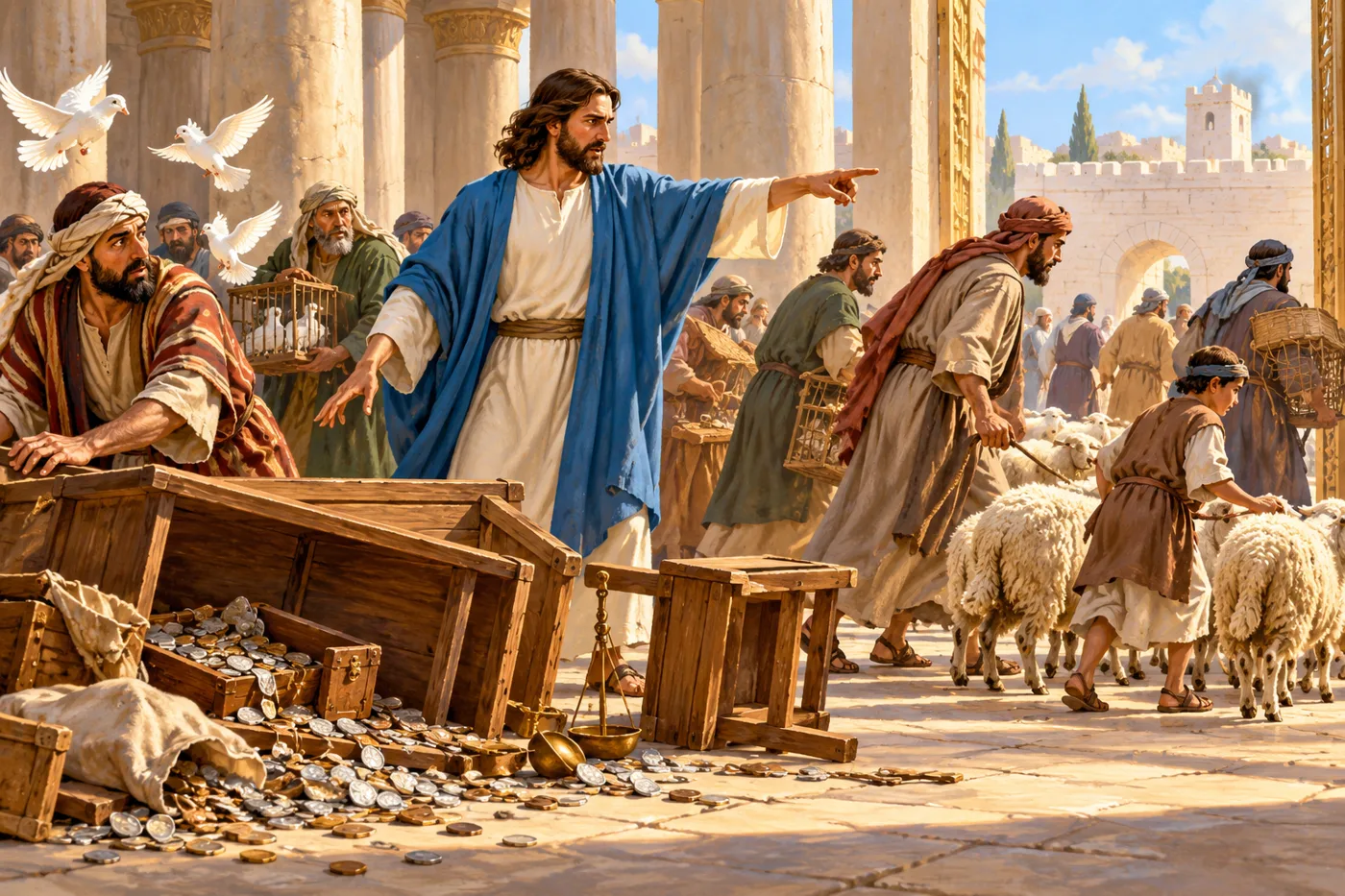
Jesus went to Jerusalem for the Passover. He entered the temple, the place where people came to worship God.
But part of the courtyard had become a noisy market. Animals were being sold, and money changers were working at their tables. Travelers bought animals for offerings. Money changers exchanged coins for those accepted at the temple.
The noise and buying made prayer difficult. Some people also used this trade to charge unfair prices. Jesus saw that his Father’s house was being treated like a business.
When Jesus saw what was happening, he acted firmly. He told the sellers to take their things away. His Father’s house was a place for worship. Then he overturned the money changers’ tables and sent the animals out.
Jesus did not seek money or power for himself. He wanted people to have room to come to God.
A House for Prayer
Continued
Then the leaders asked what sign showed he had authority to act that way. Jesus answered by speaking about the temple of his own body: if they destroyed it, he would raise it in three days. But they thought he meant the building. Jesus was speaking about his death and resurrection.
His friends would understand those words after he rose from the dead.
A place for prayer should welcome people who need God. We can help by keeping our voices gentle, listening, and making room for others.
Jesus teaches us that loving God matters more than getting things for ourselves.
A House for Prayer
Coloring page
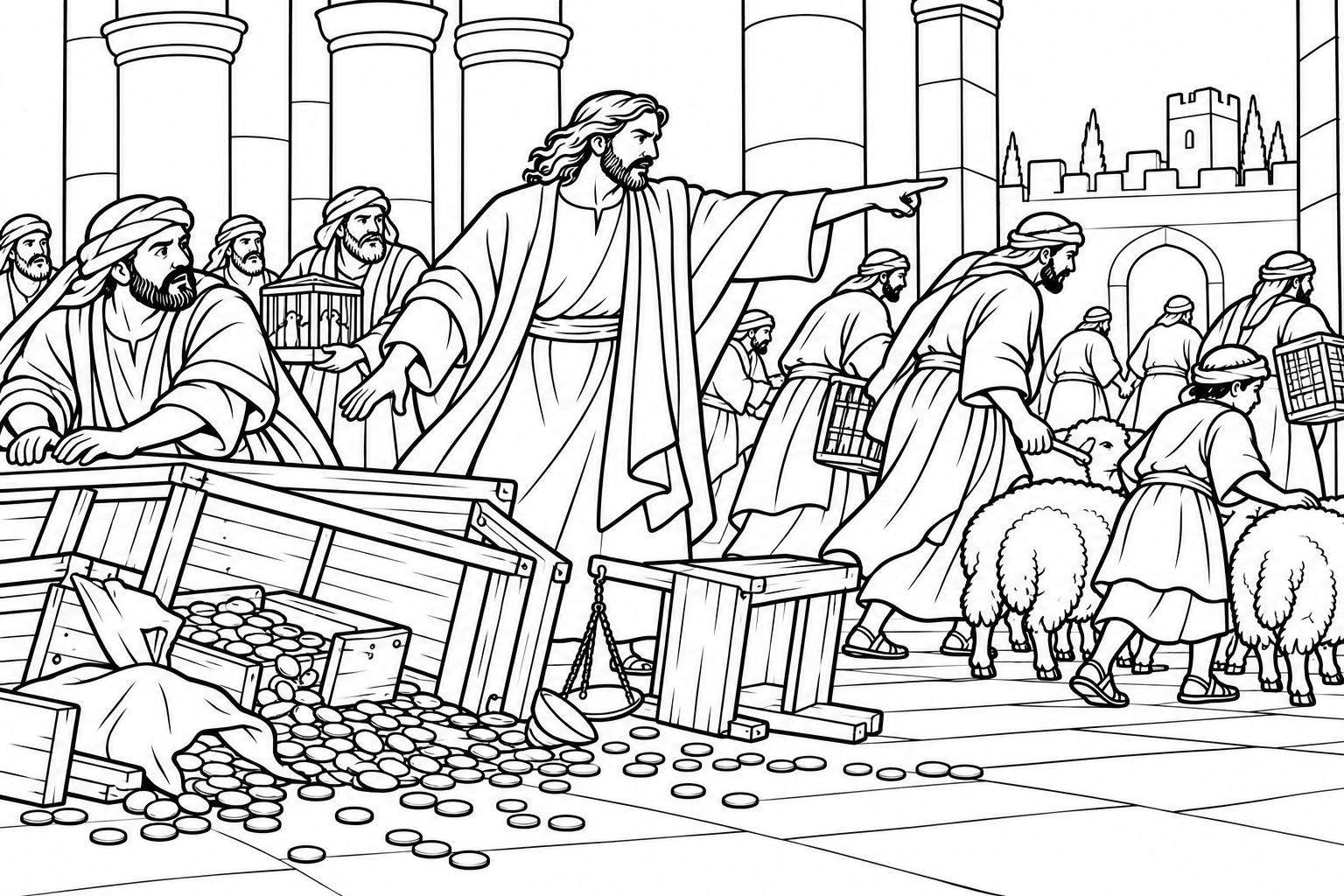
A House for Prayer
Talk about it together
What made praying difficult in the temple courtyard?
How might people feel when looking for a quiet place to pray?
How can you help others have room and quiet?
A House for Prayer
A Small Quiet Space
Without moving furniture, choose a comfortable place to talk or pray. Lower your voices, make room, and listen for a few moments. Each person may share a sentence or simply be present; there is no need to act out the temple argument.
Draw a scene from the story or write how you would put what you learned into practice.