David: From the Flock to the Kingdom · Part 16 of 16 · 4 min
A Place at the King’s Table
One day, King David remembered an old promise. Long before living in Jerusalem, he had been Jonathan’s friend. They had committed themselves to showing kindness to each other’s families, even when the circumstances of their lives changed.
Jonathan had died, but his family still mattered. David asked whether anyone remained from Saul’s household to whom he could show kindness for his friend’s sake. He wanted the promise to reach a real person.
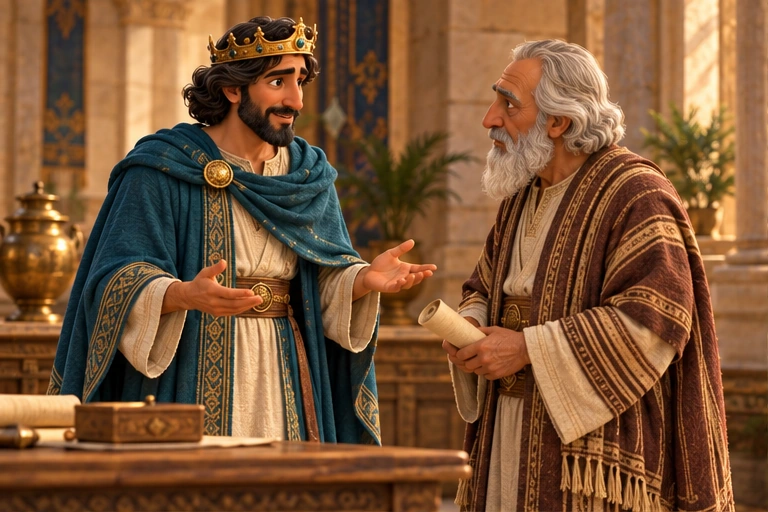
They called Ziba, a man who had served that household. He explained that a son of Jonathan was still alive. His name was Mephibosheth, and he had a disability affecting both feet. David asked where he lived so he could send for him.
Mephibosheth lived far from the palace, in Lo Debar, at Makir’s home. David sent someone to bring him. Jonathan’s son did not know what the invitation meant. Meeting a king from another family could make him anxious and afraid.
When he arrived, he bowed before David. The king called him by name and told him not to be afraid. The welcome did not begin with his feet or what he could do. It began by recognizing him for who he was and remembering his father.
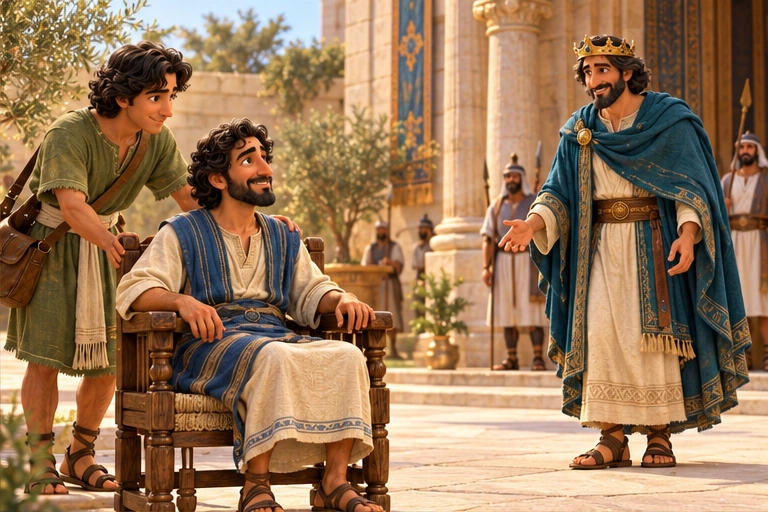
Then David explained, “Do not be afraid. I will show you kindness for the sake of your father Jonathan. You will always eat at my table.” He would also restore the land that had belonged to Saul, his grandfather. The welcome was becoming practical help.
Mephibosheth was amazed and spoke as though he had very little worth. David did not need to agree with that view. He was offering something practical: property that belonged to him and a place to share life in the palace.
Then David called Ziba to arrange the care of the land. He, his sons, and his servants would farm it and gather its crops for Mephibosheth’s household.
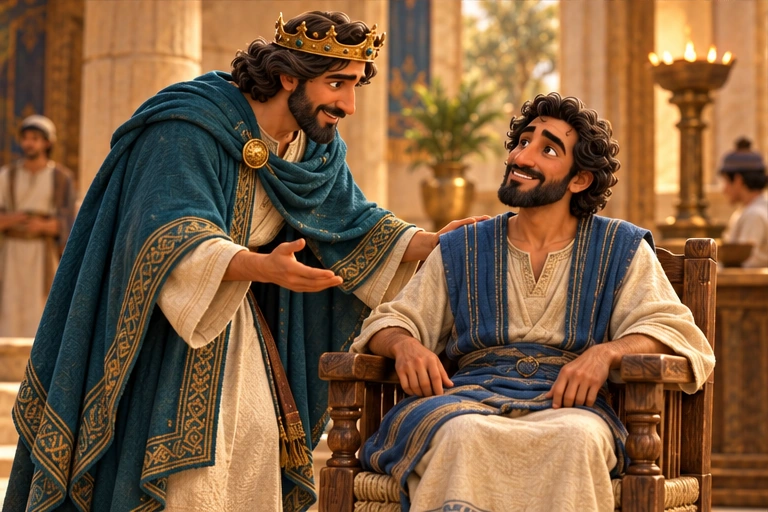
Ziba accepted the king’s instructions. Mephibosheth would live in Jerusalem and eat at David’s table like one of his sons. His own young son, Mica, belonged to this family that was continuing after so many losses.
At the table was a place for Jonathan’s son. It was not a reward for walking a certain way or proving he could do everything without help. Kindness remembered a friendship and recognized the dignity of someone who was important.
Mephibosheth’s disability did not disappear. The Bible still mentions it at the end of the account. What changed was his place in their shared life. He received land, support, and an invitation that did not leave him waiting outside.
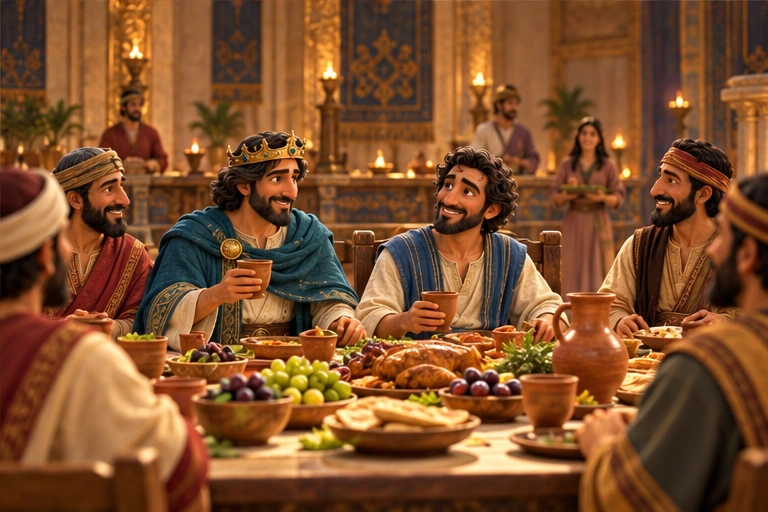
Years after the gift of a robe and a farewell in a field, David was keeping his promise. Jonathan was no longer there to hear it. His son could receive that kindness, sit at the table, and know there was a place for him.
Based on 2 Samuel 9 · Patriarchs and Prophets, 70.
Talk about it together
- Kindness
- Commitment
- Inclusion
- What promise did David remember?
- What two practical things did he offer Mephibosheth?
- Why did having a place not depend on walking without help?
Make room for someone
Set the table together for a meal. With an adult, check that everyone can reach their place and what they need. Ask each person what help they would like before offering it. Add a card with each family member’s name at their place.
Ask how to make room and offer help while respecting what each person wants.
Activities for this story
Play online or print materials for home, class, and family.