Draft for review
David: From the Flock to the Kingdom · Part 17 of 17 · 4 min
David Listens to the Truth
David was king and held great authority. He could give orders, receive visitors, and make decisions affecting other people’s lives. But a crown did not make every decision good. One day he used his power in a deeply wrong way.
Bathsheba was the wife of Uriah, one of David’s soldiers. David had her brought to him and took her for himself, although she was married. He abused his authority. The responsibility was David’s. We must not place the blame on her.
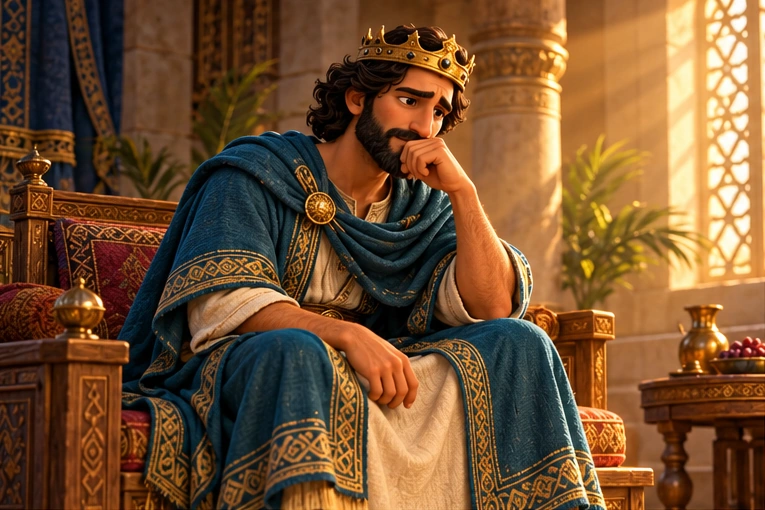
Then David tried to hide what he had done. He called Uriah back from serving with the army. He hoped his plans would keep the truth from being discovered. But each effort to hide his wrongdoing led to another unjust choice.
When his plans failed, David ordered the army commander to place Uriah in great danger and leave him without support. Because of those orders, Uriah died in battle. David had caused harm that he could never undo.
Bathsheba mourned her husband’s death. Afterward, David brought her into his home and married her. But God knew what had happened, including what the king had tried to hide.
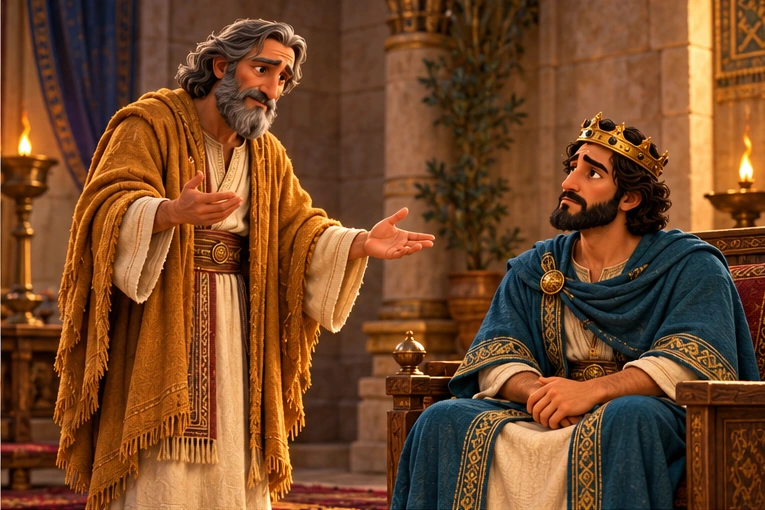
God sent the prophet Nathan to speak with David. Nathan began with a story. In it, a rich man owned many animals. A poor man had only one little lamb, which he cared for with great affection.
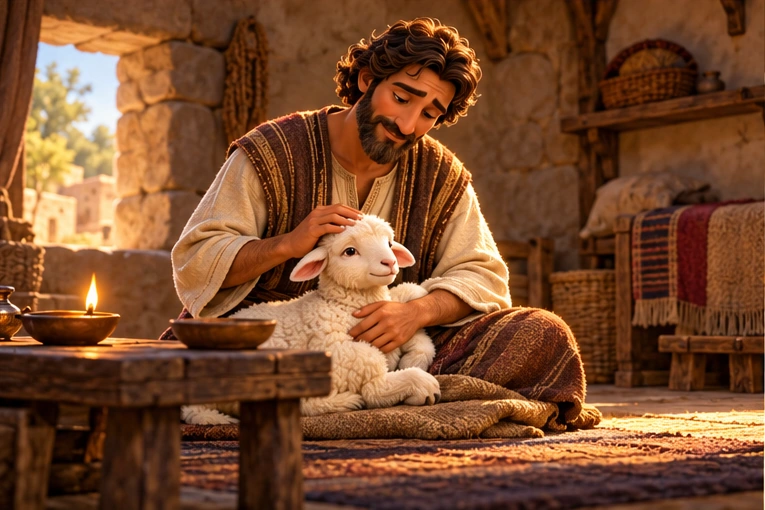
The lamb lived close to the poor man’s family and was dearly loved. When the rich man received a visitor, he would not use one of his own animals for a meal. He took the poor man’s only lamb instead.
David listened and became angry. It seemed terribly unjust for the powerful man to take what the other loved. He still needed to recognize that Nathan was helping him see his own behavior.
Then Nathan said plainly, “You are that man.” David had received much, but he had taken what did not belong to him and caused Uriah’s death.
This time David did not invent another explanation. He admitted his guilt: “I have sinned against the Lord.” He accepted the truth Nathan had shown him. Honesty began with no longer blaming others and naming his responsibility for the harm he had caused.
Nathan announced God’s forgiveness, but also painful consequences. Being forgiven did not bring Uriah back or erase his family’s suffering. David had to live with the truth of what had happened and learn to receive correction.
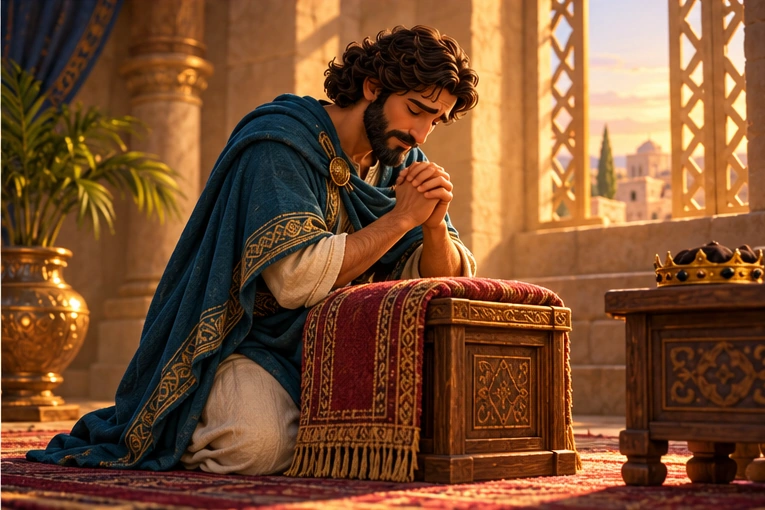
David wrote Psalm 51 as a prayer of repentance for what he had done. David asks to be made clean within and to receive a renewed heart. The king needed mercy like anyone else. His story shows why hearing truth matters, especially when our power affects other people.
Based on 2 Samuel 11:1-12:13; Psalm 51 · Patriarchs and Prophets, 71.
Talk about it together
- Honesty
- Repentance
- Responsibility
- Who was responsible for the orders that caused Uriah’s death?
- What injustice did the lamb story show?
- What did David acknowledge when Nathan told him the truth?
Tell and repair
An adult offers a small example: someone accidentally tears a picture and hides it. Practice explaining what happened, taking responsibility, and asking how to help repair the harm. Make a new drawing together and discuss why listening to the affected person matters.
When you cause harm, tell the truth, accept help, and take part in repairing what you can.
Activities for this story
Play online or print materials for home, class, and family.