David: From the Flock to the Kingdom · Part 18 of 18 · 4 min
Food and Rest Along the Way
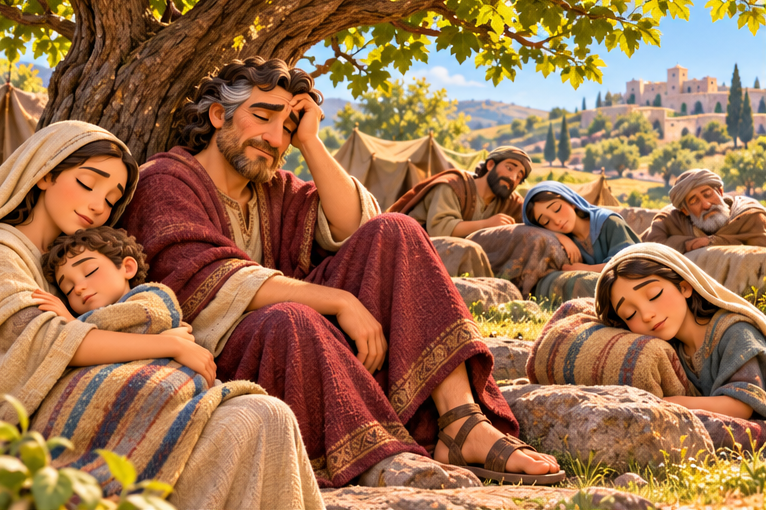
David was far from Jerusalem. His son Absalom had rebelled, and the king had left the city with those accompanying him. It was a time of worry and danger. After traveling along the road, David reached Mahanaim, on the other side of the Jordan River, away from his own home.
The group needed help. People were tired, hungry, and thirsty in the wilderness. Telling them to keep walking or simply be strong would not be enough. Their bodies needed food and rest. The Bible lets us pause for a moment to notice these ordinary needs that mattered so much.
Three men paid attention: Shobi from Rabbah, Machir from Lo Debar, and Barzillai from Rogelim in Gilead. They did not all come from the same place, but the three appear together in this act of kindness. They recognized the need of David and his people, and they did something about it.
They brought beds, basins, and clay vessels. The group needed more than a quick mouthful of food. People needed utensils and somewhere to rest as well. The Bible mentions these objects because care reaches into daily life. Where people lie down and how they receive their food matter too.
They brought wheat, barley, flour, and roasted grain. They also brought beans, lentils, and other provisions. They had gathered food for people who needed to regain their strength. Each resource could help meet a need in the group.
Their supplies also included honey, curds, sheep, and cheese from the herd. This was more than a short word of encouragement with no other help. These men had brought useful things. Their concern for other people had become food and materials that could meet the needs in front of them.
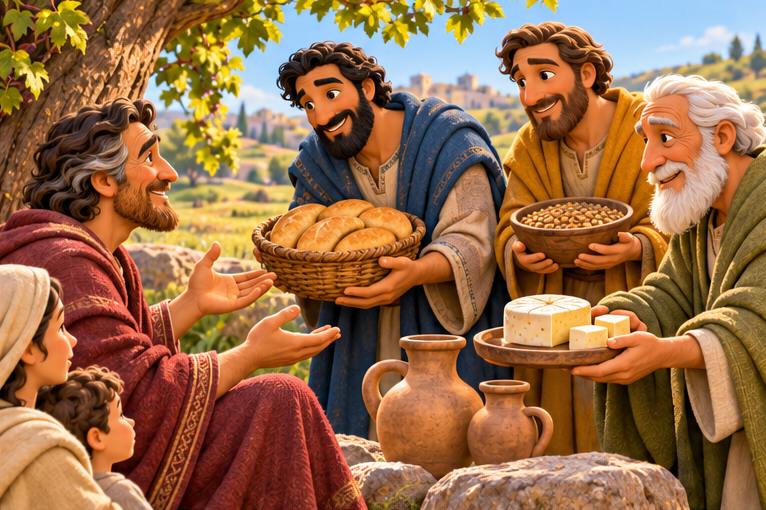
The food was for David and for the people with him. The helpers had recognized, “The people are hungry, tired, and thirsty in the wilderness.” They did not care only for the king as though everyone else were unimportant. Their help reached his companions too.
The rebellion was not over, but the group received help to keep going. Food and rest did not erase the danger or sadness. They provided needed care in the middle of those difficult days.
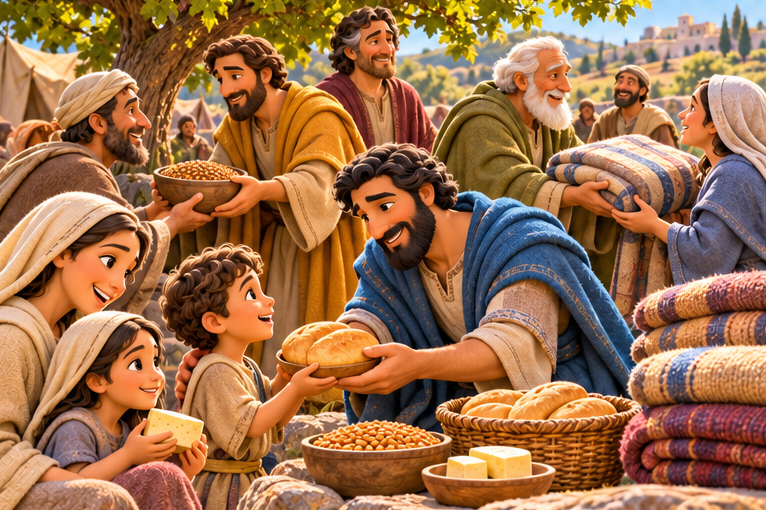
We also meet tired people today: someone who has just moved, a family with a new baby, or a neighbor who is ill. We do not always know what would help. With a grown-up, we can ask and offer something suitable, respecting a person’s wishes or need for quiet.
Perhaps we can make a card, help put groceries away, or share a snack with permission. Children do not need to carry grown-ups’ responsibilities. This story shows that love can take a practical form. We can pay attention and offer help that responds to what another person actually needs.
Based on 2 Samuel 17:27–29 · The Bible, 2 Samuel 17:27–29.
Talk about it together
- Generosity
- Attentiveness
- Compassion
- Who brought help?
- What did the travelers need?
- Why does help matter even when it cannot solve everything?
A basket of help
Draw three things that might help a tired person. Ask before offering them.
I can notice a need and offer useful help.
Activities for this story
Play online or print materials for home, class, and family.