Bible story · 7 min
Jacob and Esau: The Precious Birthright
Long ago, Isaac and Rebekah loved God and cared for one another. For many years they hoped for children, so they prayed together for a child and trusted that God heard them.

God answered their prayer. Rebekah learned that she was going to have not one, but two baby boys! The babies moved so strongly inside her that she asked God what it meant.
God told Rebekah that the two boys would grow into two great families. The older boy would one day serve the younger. Rebekah kept those surprising words in her heart.
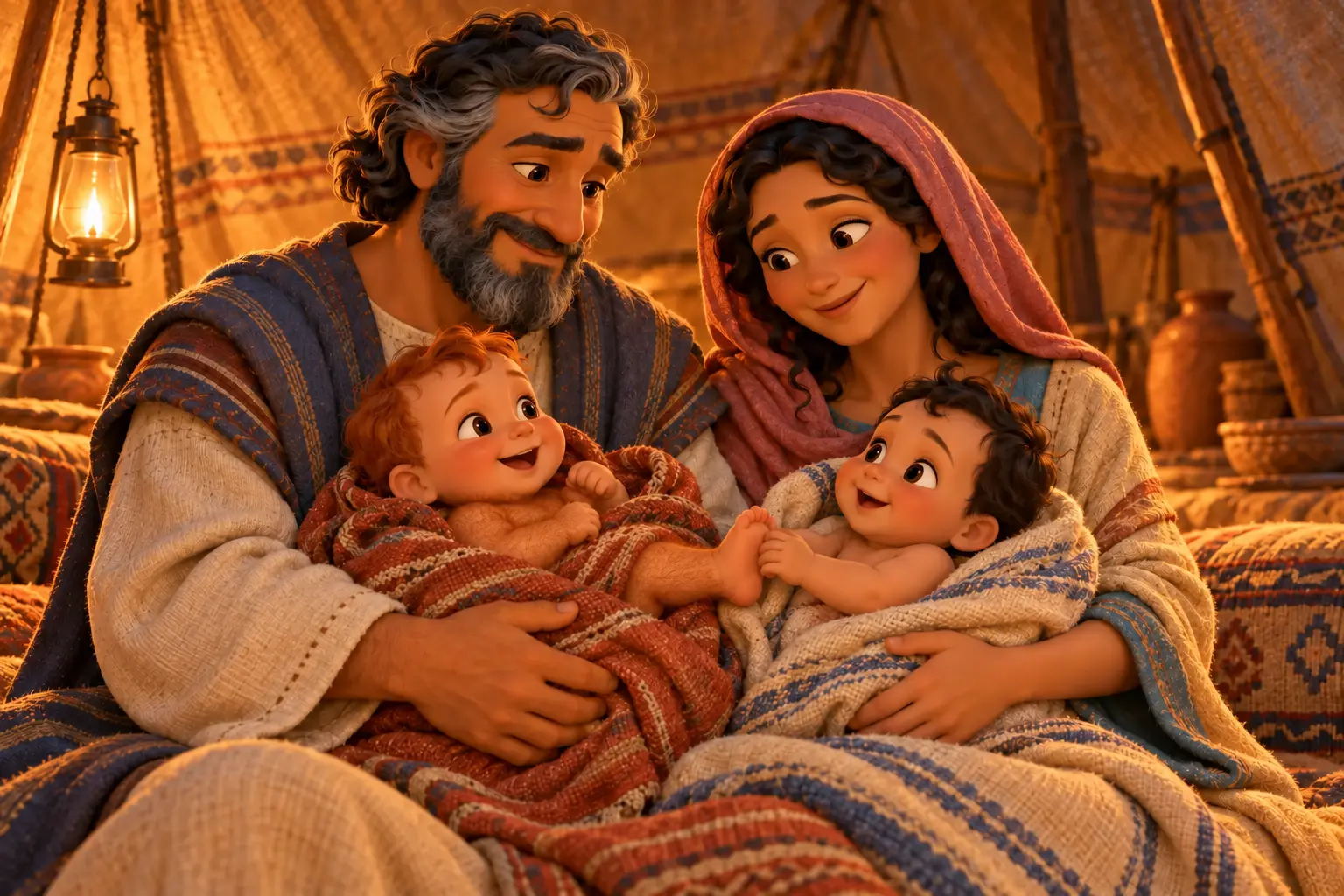
When the twins were born, the first baby was reddish and covered with soft hair. They named him Esau. The second baby came out holding his brother’s heel. They named him Jacob.
Although they were twins, the boys grew to be very different. Esau loved the open country. He enjoyed running over the hills, following animal tracks, and feeling the wind on his face.
Jacob preferred staying near the family tents. He listened carefully, helped with the animals, and learned how to prepare food. Isaac enjoyed hearing Esau’s stories from the countryside, while Rebekah understood Jacob’s quiet ways. Both sons were deeply loved.

Because Esau had been born first, he had something called a birthright. It was a special family responsibility and blessing. One day he would help lead and care for the family and receive an important part of what his father owned.
A birthright was not a toy or a prize for just one day. It was a precious gift meant for the future.
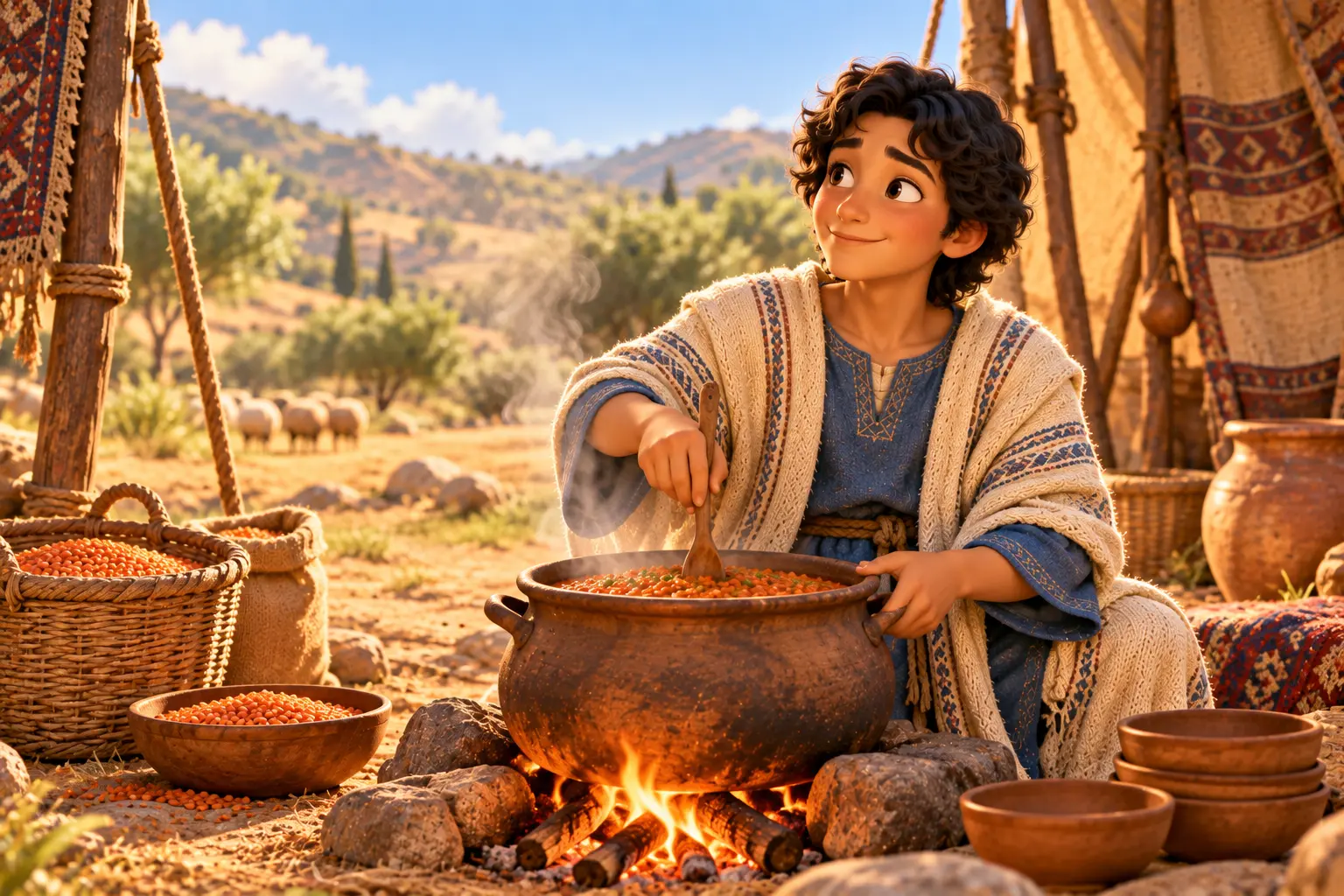
One afternoon, Jacob was cooking a red lentil stew. It bubbled softly over the fire, and its warm, delicious smell drifted through the camp.
Just then, Esau returned to the camp tired and hungry. His steps were slow, his shoulders drooped, and all he could think about was food. When he saw the steaming pot, he hurried toward his brother.
“Jacob, please give me some of that red stew. I am very hungry.”

Jacob thought about Esau’s birthright. Instead of simply sharing the food, he answered, “First, promise me your birthright.”
This was not a kind or fair bargain. Jacob should not have used his brother’s hunger to get something precious. And Esau needed to stop, think, and remember how valuable his responsibility was.
But Esau was focused only on how hungry he felt at that moment. He did not think carefully about tomorrow. “I promise. You may have my birthright.”
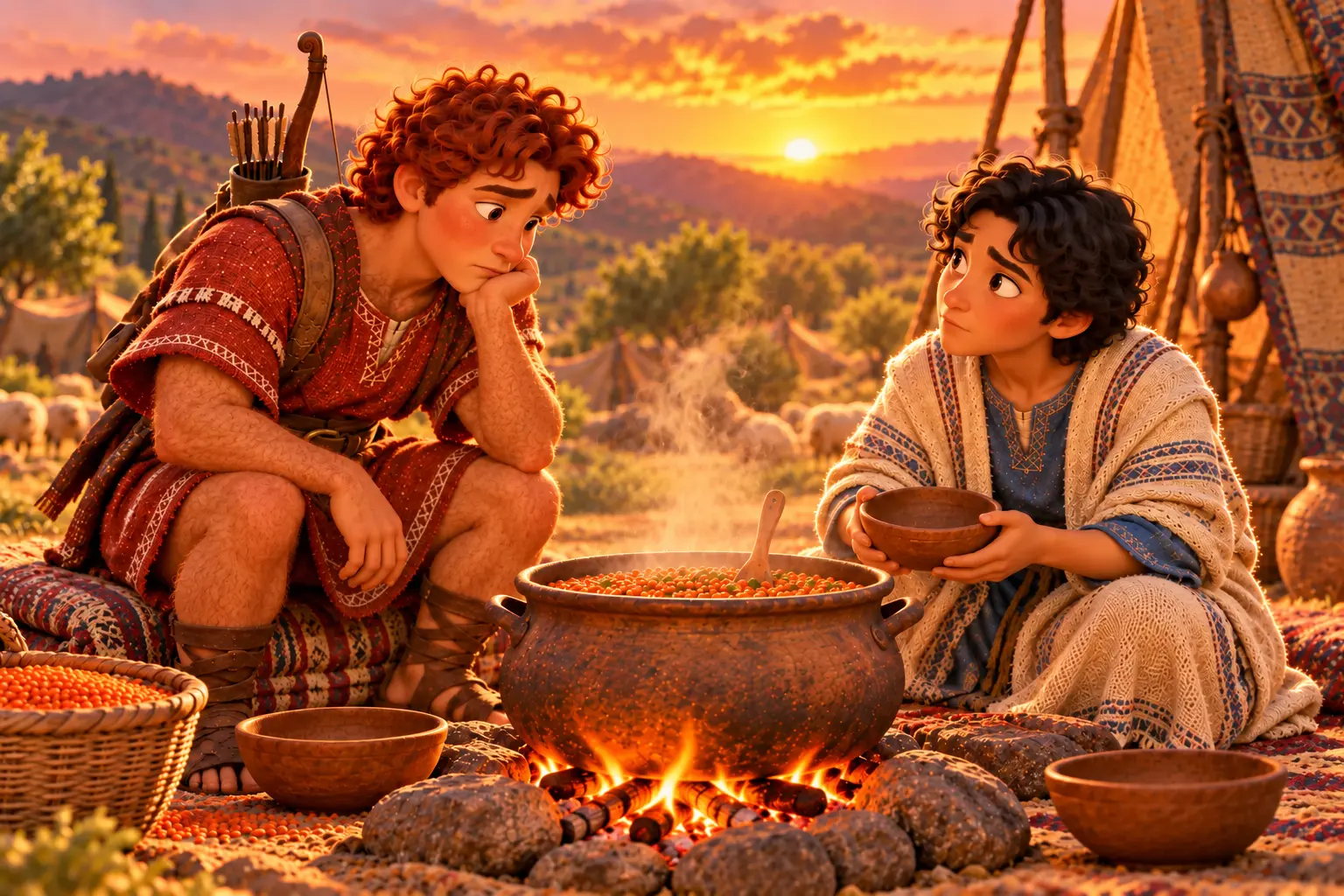
Jacob gave Esau bread and a bowl of stew. Esau ate until he was full, then stood up and went away. The hunger soon passed, but the promise he had made remained.
Both brothers had made unwise choices. Jacob had not treated his brother fairly, and Esau had treated a lasting gift as though it did not matter.
God wants us to value the gifts and responsibilities He gives us. When we feel hungry, angry, tired, or impatient, we can pause and ask for help before making an important choice. We can also choose kindness instead of taking advantage of someone who is struggling.
God did not abandon Jacob or Esau. He would continue teaching both brothers through many adventures, because their story was not over.