A parable of Jesus · Part 4 of 20 · 3 min
Who Stopped to Help?
A man asked Jesus whom he should love as his neighbor. Jesus answered with a story.
A traveler was going from Jerusalem to Jericho. Along the road, robbers took his things and left him hurt.

He needed help. He could not go on alone.
A priest came along. He saw the hurt man but passed by. Then a man who helped at the temple came along. He passed by too.


Next came a Samaritan.
Samaritans and Jews did not always get along. But this traveler did not think only about their differences. He saw the man and felt compassion.
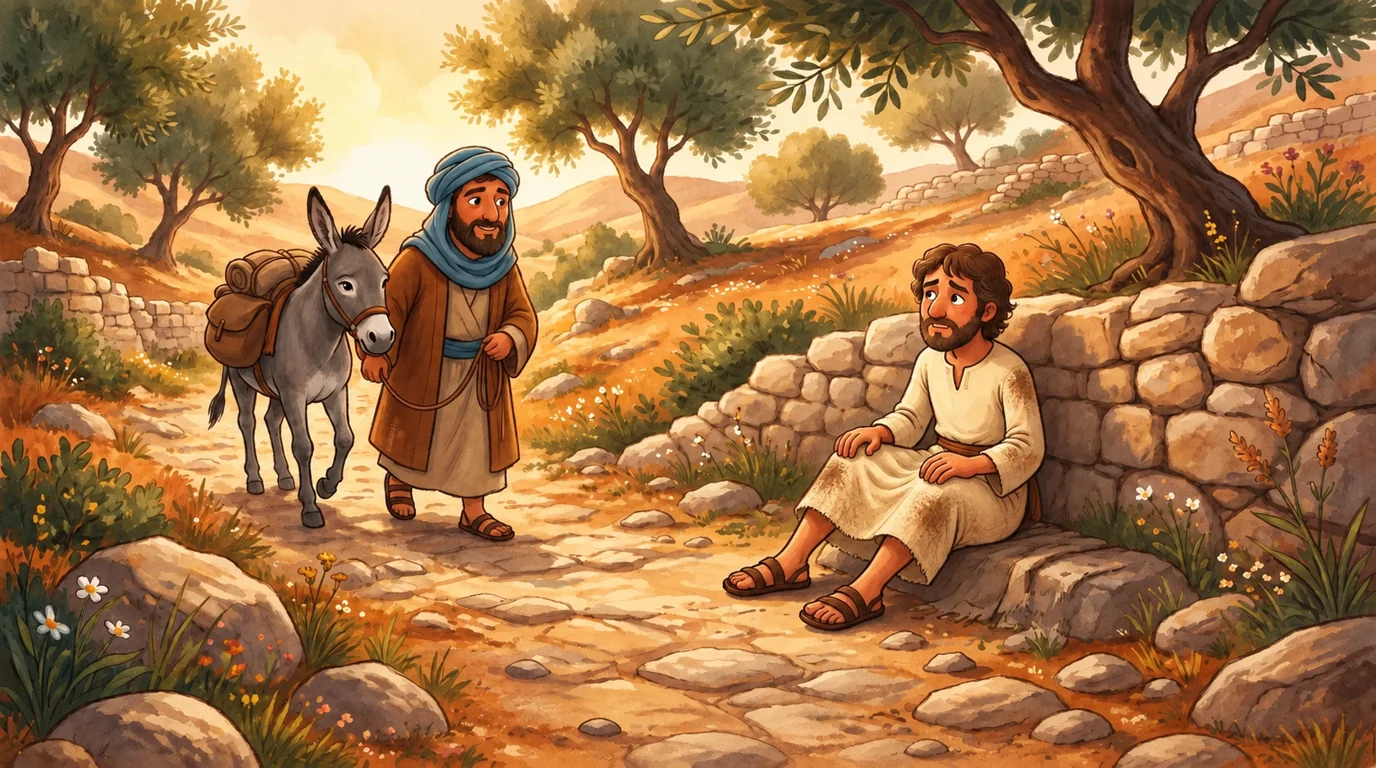
The Samaritan came closer to help. He cared for the man's wounds and wrapped them in bandages.


He put the man on his animal and took him to an inn, where he could rest.
There he kept caring for him.
The next morning he took out two coins and gave them to the innkeeper. He asked him to care for the traveler. If more money was needed, he would pay when he returned.

Jesus asked who had been a good neighbor. The answer was clear: the one who showed compassion.
Jesus invited the man to do the same.
Love is more than kind words. We can notice what someone needs and help.
If you see someone hurt, find a trusted grown-up right away. You can stay nearby while help comes.
We can share, comfort, and respect people who are different from us. We do not have to know someone to wish them well.

Jesus tells us a story, and his love stays with us.
Retelling of Luke 10:25–37.
Supporting reading: Christ's Object Lessons, chapter 27. Open the English book
Talk about it together
- Compassion
- Service
- Respect
A verse to remember
“Anxiety in the heart of man causes depression, But a good word makes it glad.”
Proverbs 12:25NKJV
- How did the Samaritan help the traveler who was hurt?
- How might the traveler have felt when someone stopped to care for him?
- Which grown-up would you tell if you saw someone who was hurt?
Activity · 2–5 minutes
Find Help Together
With a grown-up, imagine someone gets hurt during a game. Practice clearly saying where it happened and asking for help. Then name other simple ways to care, such as staying nearby or bringing something the grown-up requests.
Try it today: I can notice when someone needs help and tell a trusted grown-up right away.
More stories with these values
Put the story in order
Open the interactive activity or prepare a printable sheet for home, classroom, or family.
Open activity →