David: From the Flock to the Kingdom · Part 13 of 20 · 4 min
A King Who Learns to Wait
Painful news arrived: Saul and Jonathan had died in battle. David had suffered because Saul pursued him, but he did not celebrate his death. He tore his clothes as a sign of sorrow, and his men shared in the mourning.
That day they wept and fasted for Saul, Jonathan, and the Israelites who had fallen. David could acknowledge the harm he had suffered and still feel sadness over this loss.
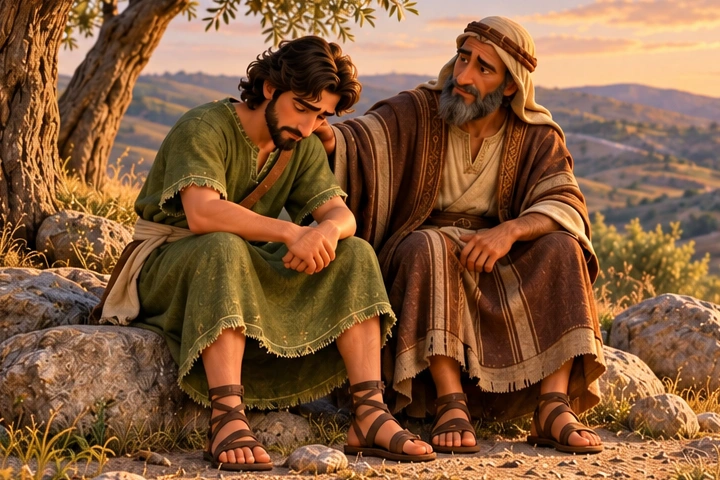
Jonathan had been his dear friend. They had made promises and said goodbye without knowing when they would meet again. Now David could not meet him in the field. Their friendship remained in his memory, along with the promise he had made.
David composed a lament for Saul and Jonathan. He remembered their courage and expressed how much he missed his friend. He wanted the people of Judah to learn the song so they would remember Saul and Jonathan. Important things needed to be said before considering what would happen next.
Then David asked God whether he should go to a city in Judah. He did not want his desire for the throne to be his only guide. God directed him to Hebron, and he prepared to travel with his family and men.

In Hebron, the men of Judah came and anointed David as their king. Years had passed since Samuel poured oil over his head in Jesse’s house. A new responsibility was beginning, but David did not yet rule all Israel.
He remained in Hebron for seven years and six months. The road toward a united kingdom was neither quick nor easy. There were disagreements and conflicts. The promise of his youth did not make waiting a short, peaceful line.
During those years, he had people to lead and decisions to make. He needed to attend to the responsibility he already had, even before all the tribes recognized him.
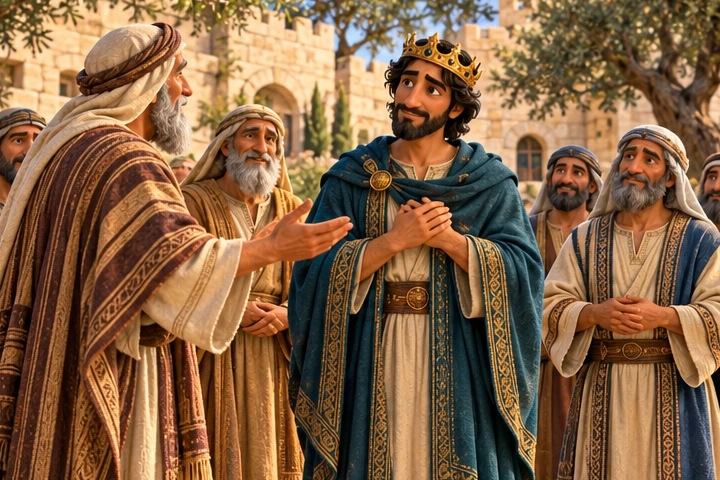
At last, representatives of all Israel’s tribes came to Hebron. They remembered how David had led them when Saul was king. They recognized the work God had given him: caring for and leading his people like a shepherd.
David made a covenant with the elders before God. Then they anointed him king over all Israel. He was no longer the boy who had hurried from the fields to meet Samuel. He had passed through many years of preparation.
Later, Jerusalem became his royal city. David understood that God had established his kingdom for the sake of the people. The crown was not simply there to make him important. It brought responsibility for the good of many people.
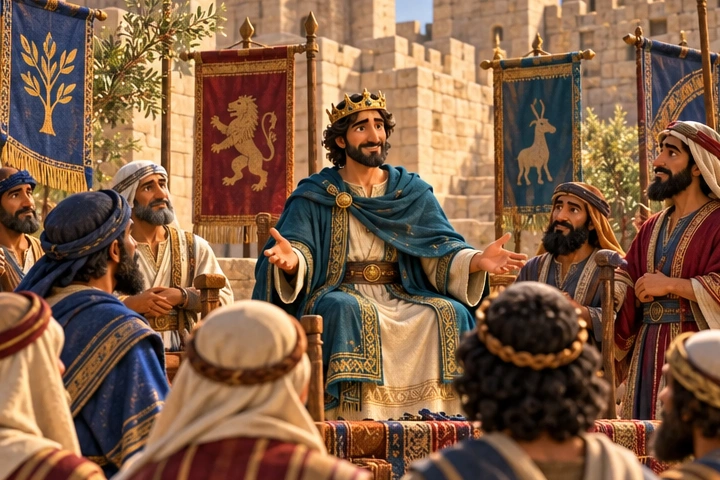
The shepherd from Bethlehem had reached the throne, but his story was not over. He would still need to listen, learn, and accept correction. Waiting had been part of the journey. Now he must use his authority to care for others.
Based on 2 Samuel 1:11-12,17-27; 2:1-4; 5:1-12 · Patriarchs and Prophets, 69.
Talk about it together
- Patience
- Humility
- Responsibility
A verse to remember
“So David knew that the Lord had established him as king over Israel”
2 Samuel 5:12 · excerptNKJV
- How did David respond to the news of the deaths?
- Where did he go after asking God?
- Did he rule all Israel from his first day in Hebron?
Activity · 2–5 minutes
Care while waiting
With an adult, plant a seed in a safe container of soil. Add the water it needs and label it with the date. Choose a small care task for each day. Observe together: waiting can include steady, thoughtful work along the way.
Try it today: While you wait for an opportunity, care for the responsibility you already have.
More stories with these values
Activities for this story
Play online or print materials for home, classroom, and family.